Slingshot Knight
Slingshot Knight is a project brought to life within a span of four months by a team of three students I assembled. I conceptualized a small game idea and reached out to a few friends, inviting them to collaborate on the project with me. I worked as Game / Level Designer and 3D/2D artist.
Our primary goal was to create a compact yet fun mobile roguelite game, incorporating some unique and exciting key mechanics.
Game concept
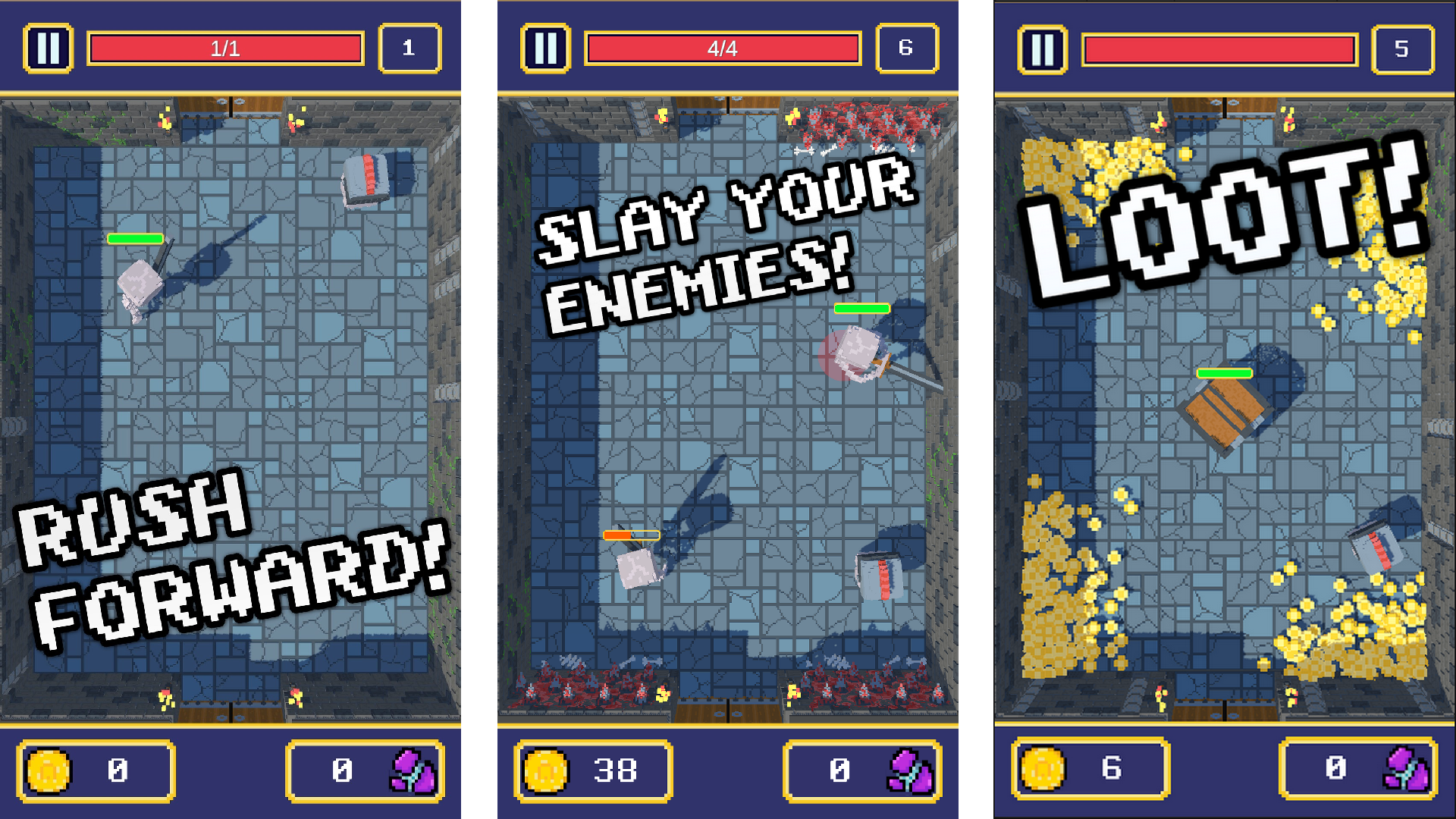
With a simple swipe on the touchscreen, players can catapult the Hero, a small ghost, across the dungeon.
Mastering launch power and precision are crucial skills for players to effectively evade enemy attacks and move around the room, defeating enemies in the process. Each enemy in the game possesses different methods of dealing damage, requiring the player to learn how to counter them.
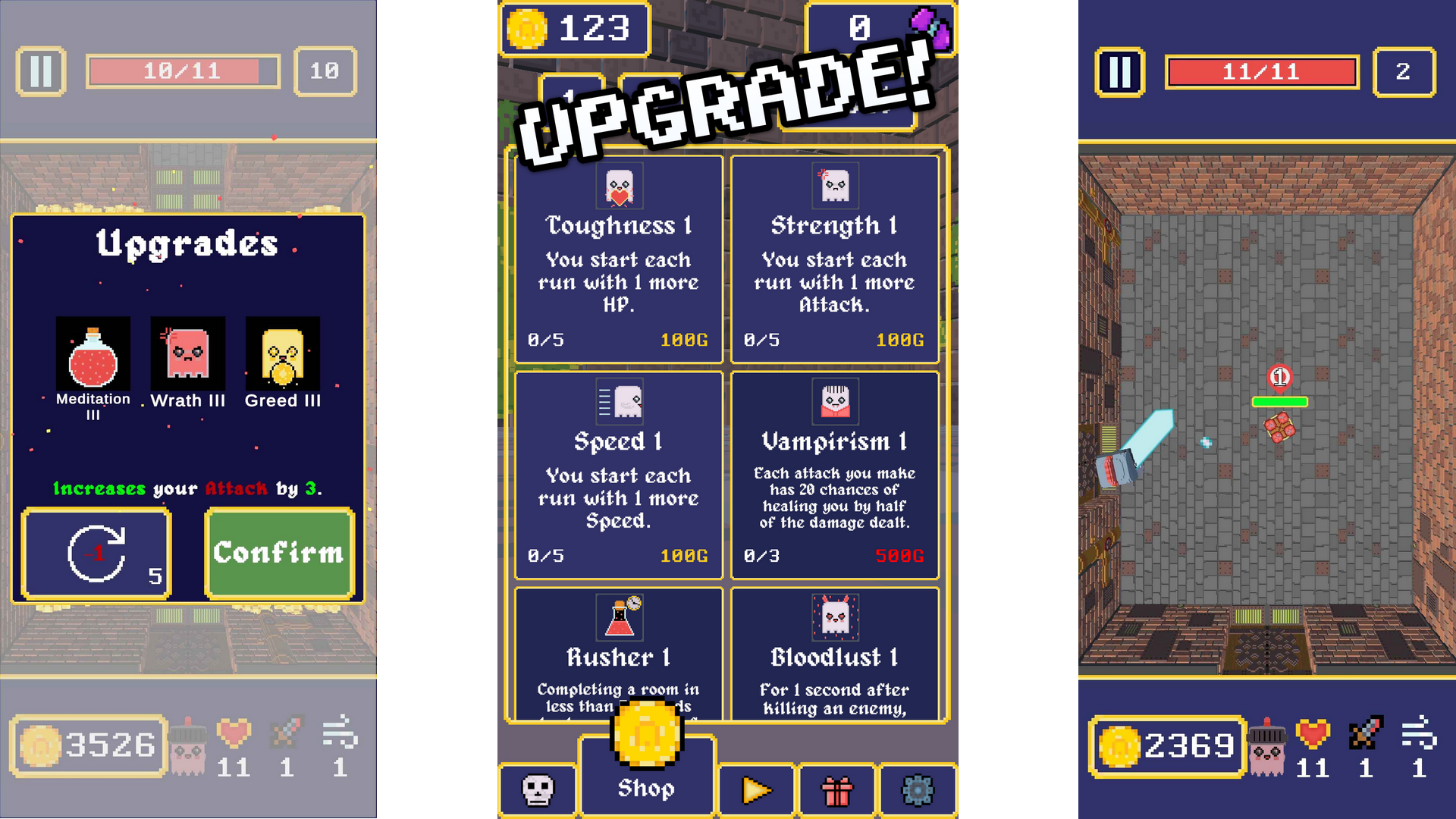
Certain rooms contain chests, offering the player a choice of three upgrades that provide bonuses for the current run. These stats reset once the run is completed.
Players also earn Gold by defeating enemies, which can be used to purchase permanent upgrades. These upgrades introduce new mechanics, encourage experimentation with different playstyles as they can be reset, and add a sense of progression, preventing the game from feeling repetitive.
Level Design
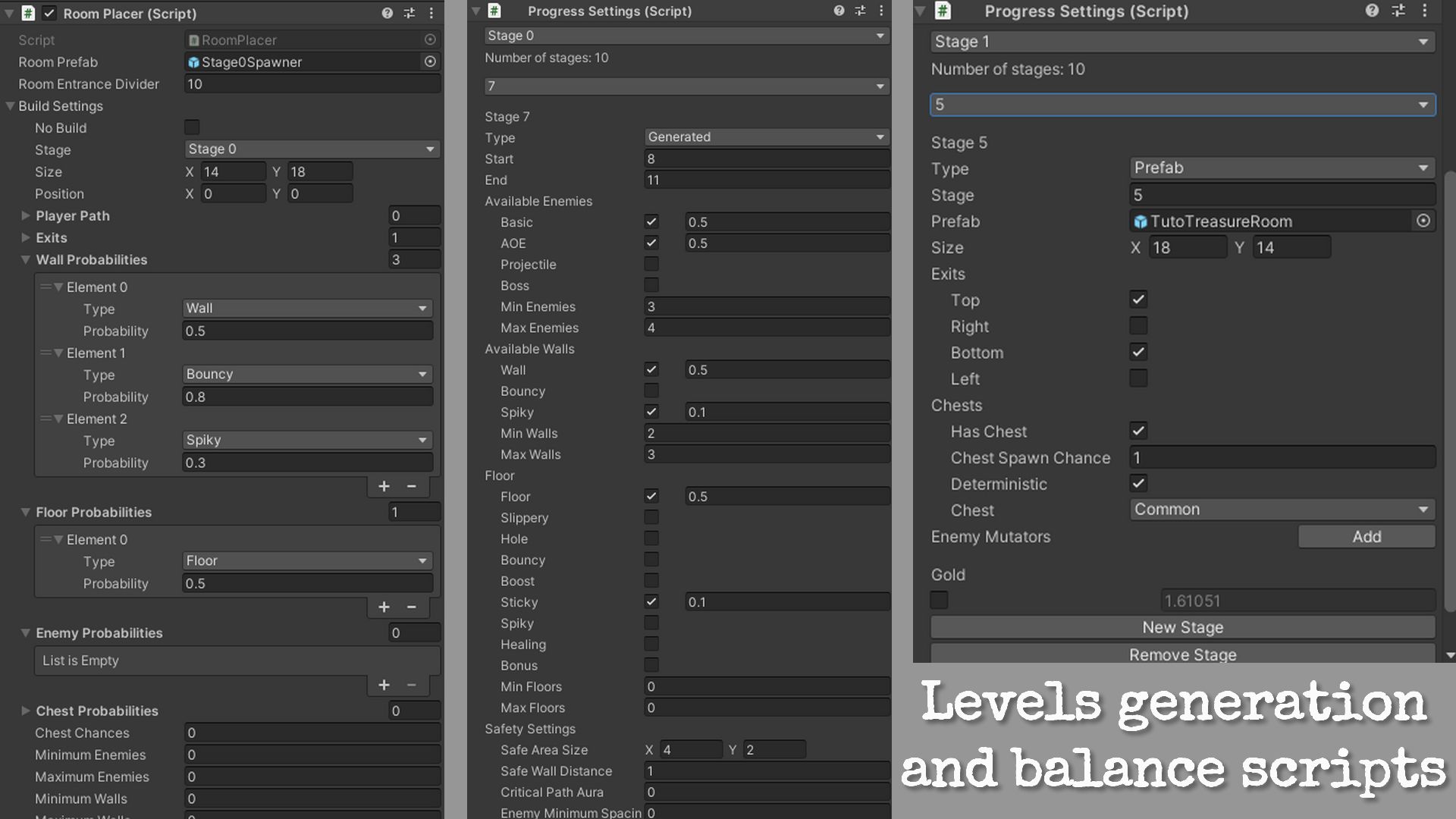
As a roguelite game, we opted for random level generation in our dungeon to ensure unique and different runs with each playthrough.
This is controlled randomness, as the chances of enemy spawns depend on the number of rooms the player has passed through. This approach allows us to gradually introduce different mechanics while maintaining a consistent difficulty curve throughout the level.
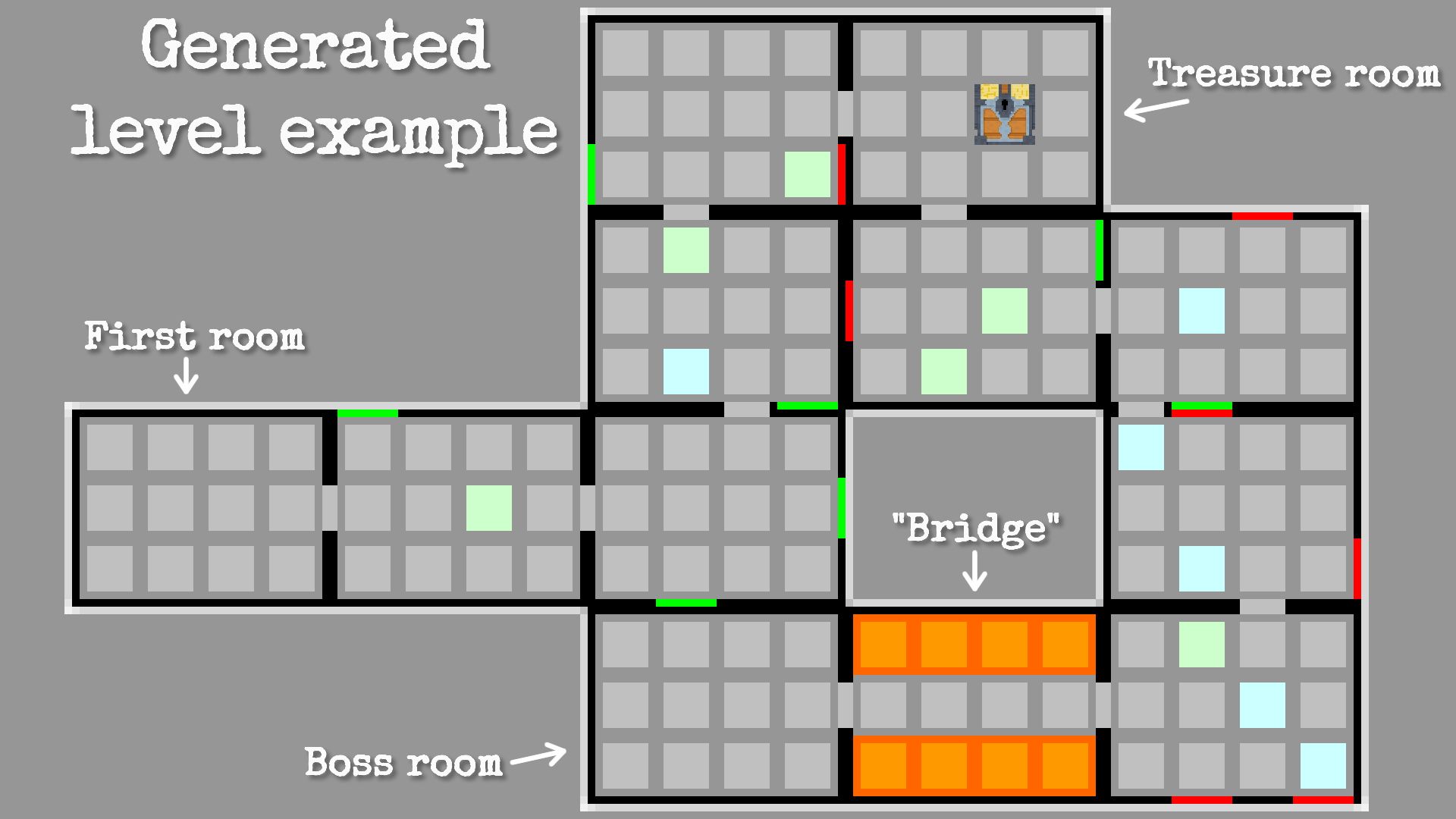
The example above is a simplified schematic and may not exactly match the in-game result.
Every 4 rooms, there is a treasure room without enemies, where the player can open a chest by tapping the screen. Right before the boss room, a "bridge" section serves as a tension breaker, signaling to the player that the boss is up next.
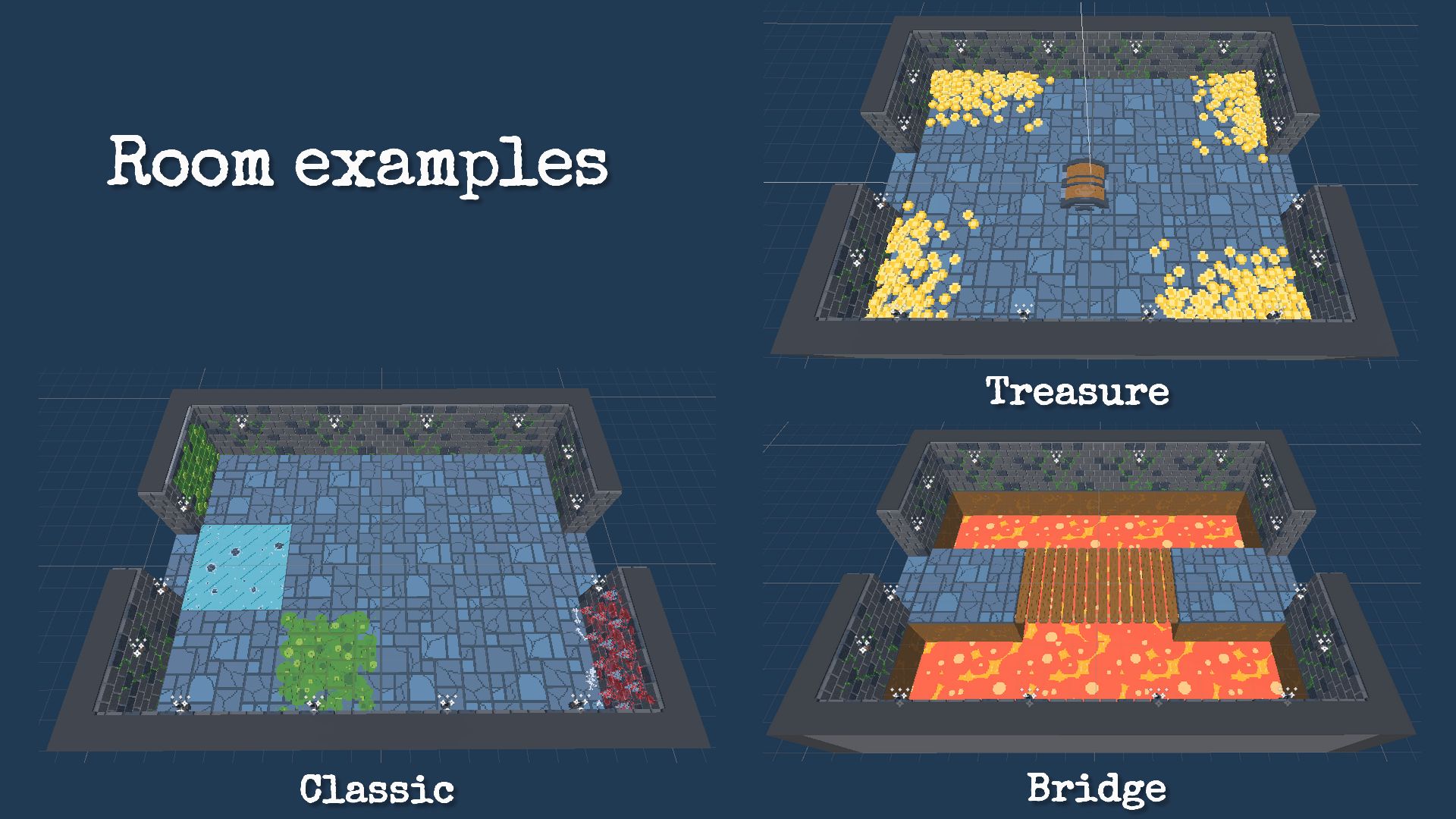
The rooms are all 4x3 in size, as this worked well with the size of a phone screen. Each wall of the room, except for the one leading to the next, can be a special wall, such as bouncy walls that make the player bounce farther, or spiky walls that deal damage if the player bounces into them.
Similarly, the floor can be sticky with higher friction, or slippery with lower friction. These elements add a layer of strategy when the player decides where to launch the character.
Art
As we didn't have an experienced artist on the team, we decided to go with a voxel style, which allowed us to create 3D models easily, as well as pixel art 2D assets. These fit well with the classic roguelike environment we were aiming for.
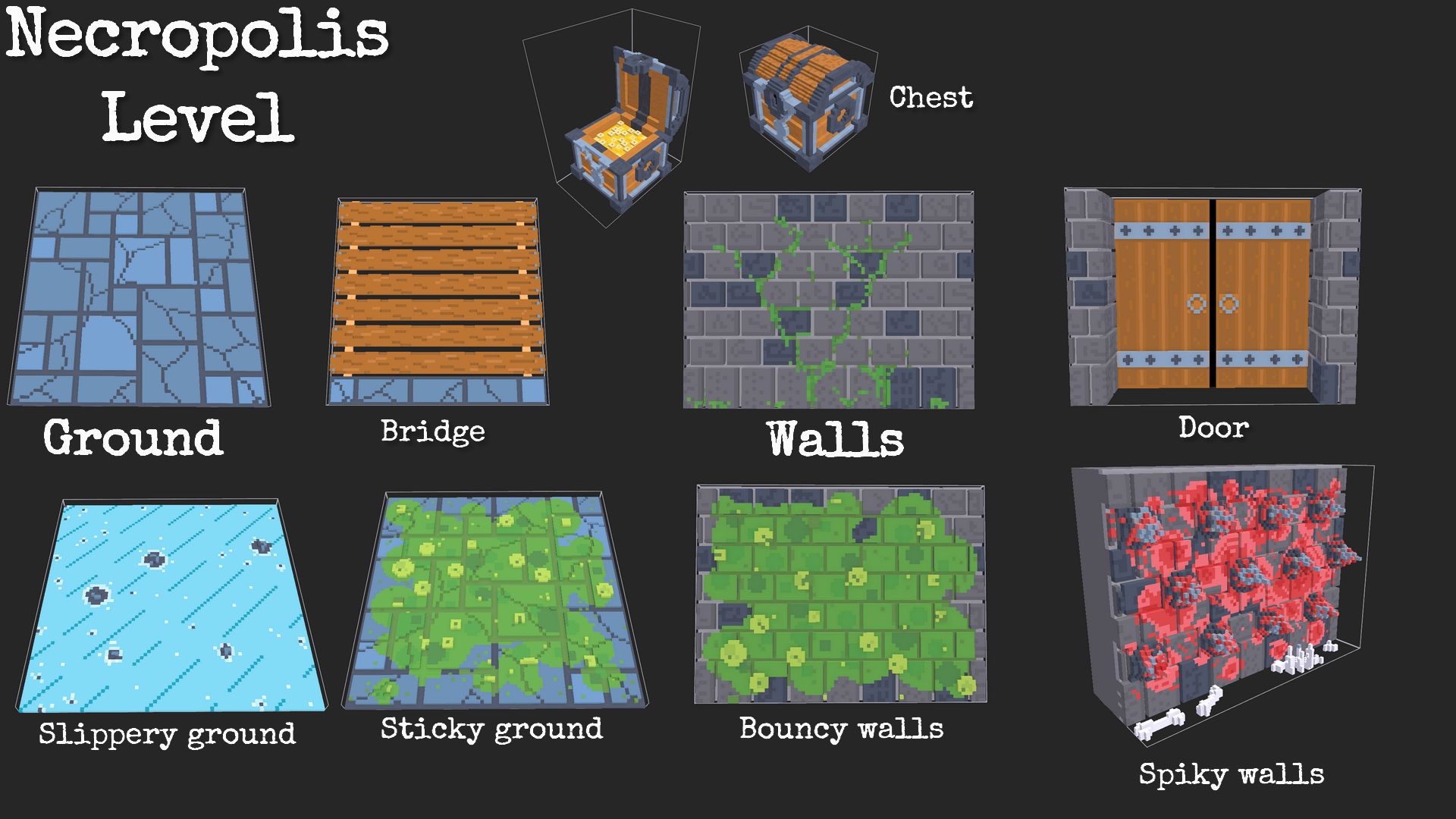
I was responsible for the game art for the environment and enemies in the first level, which featured a classic dungeon setting.
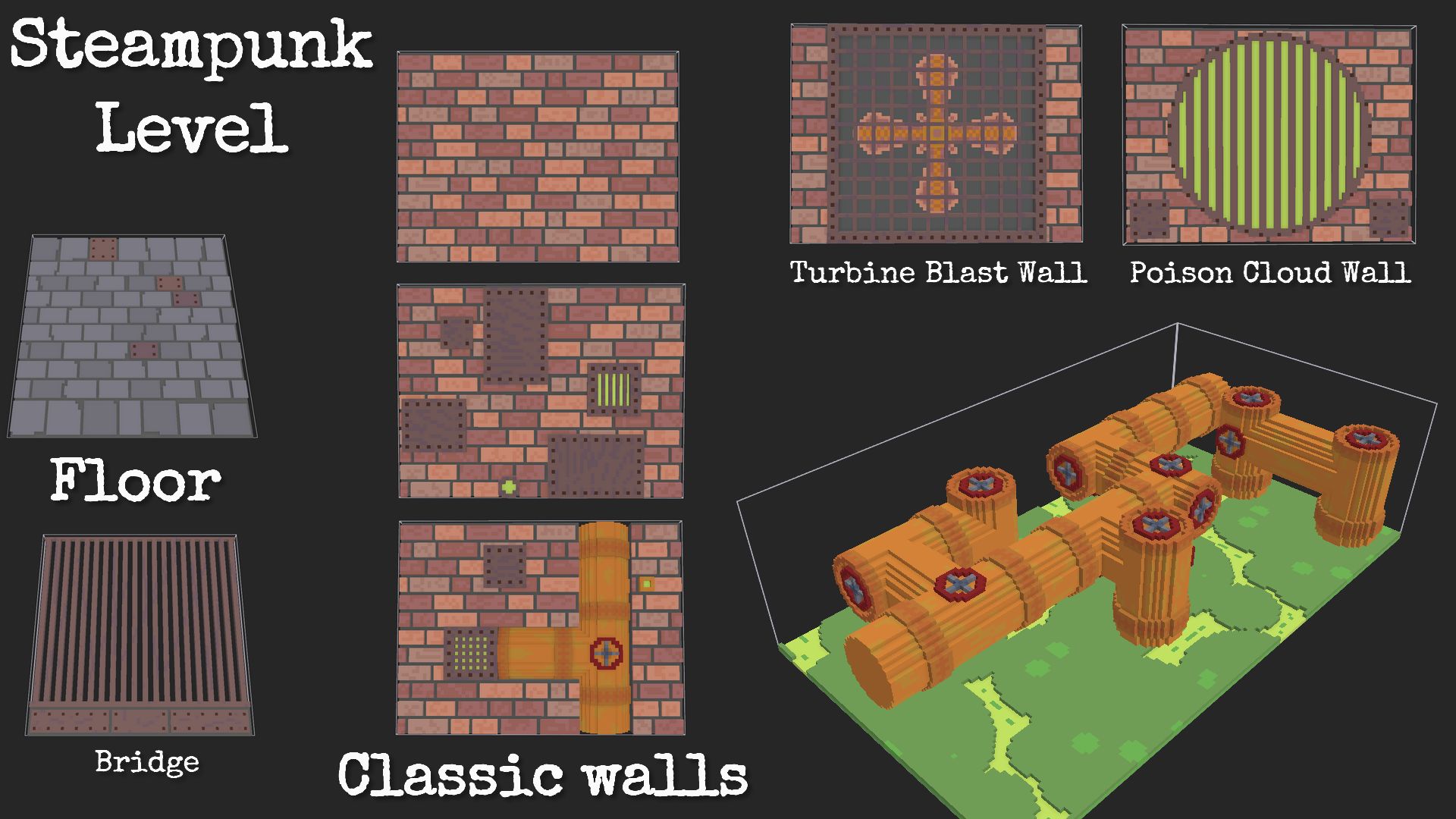
I was also responsible for the level art of the second level, a steampunk-themed environment.