Childhood's Adventure
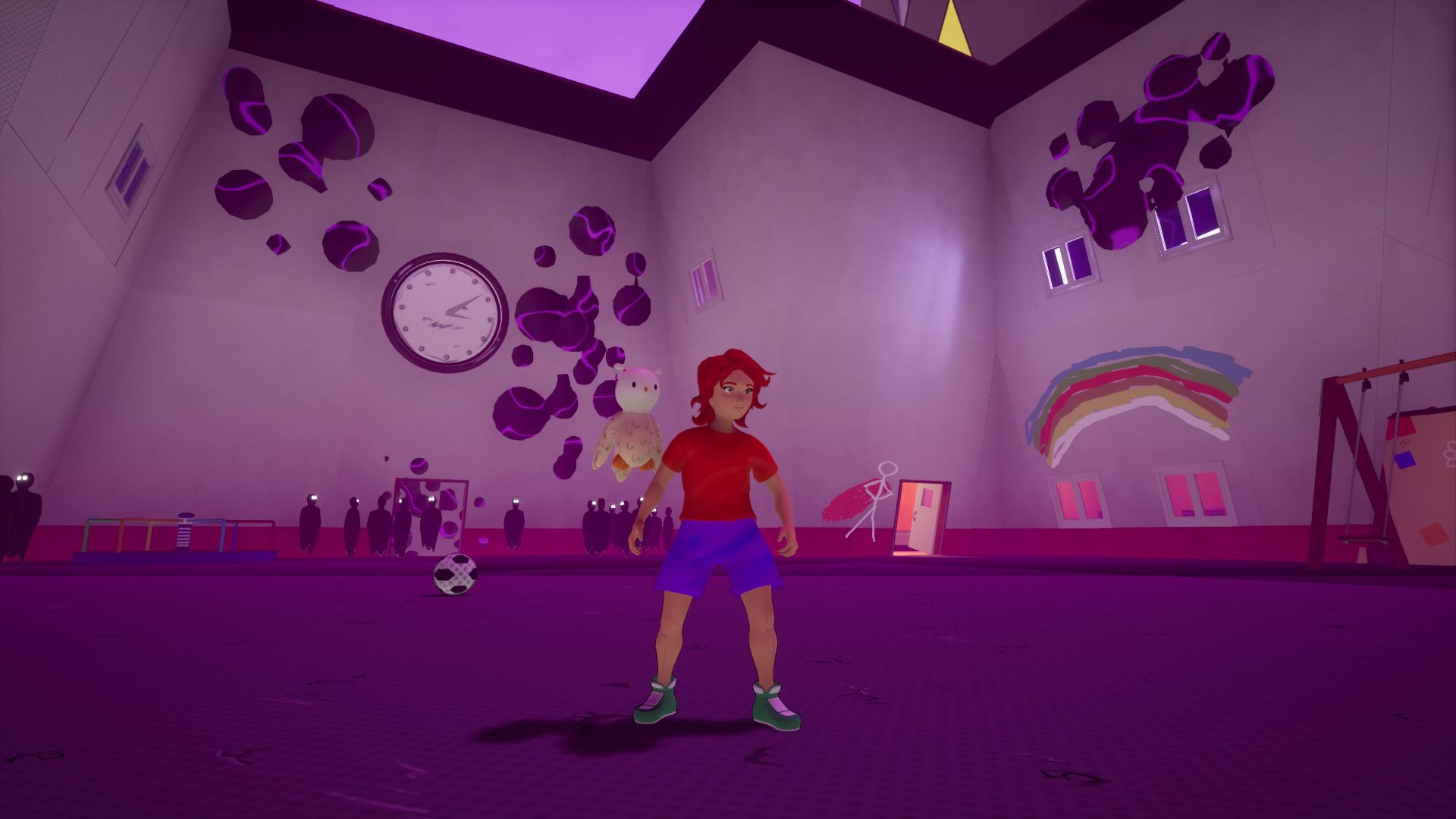
Childhood's Adventure is the final project I completed at Brassart Lyon, a school specializing in video game careers, with a team of 6 students: 2 Game Artists, 2 Game Designers (one also handling the scenario), 1 Programmer, and myself as Level Designer.
Game concept
In "Childhood's Adventure," players take on the role of Maé as they assist him in confronting the traumas of his childhood, which may resonate with their own experiences as well. Guiding Maé through his chaotic nightmares, this unique blend of boss rush and narrative gameplay delves into the depths of the player's psychology, allowing them to gain a deeper understanding of their own emotions and struggles.
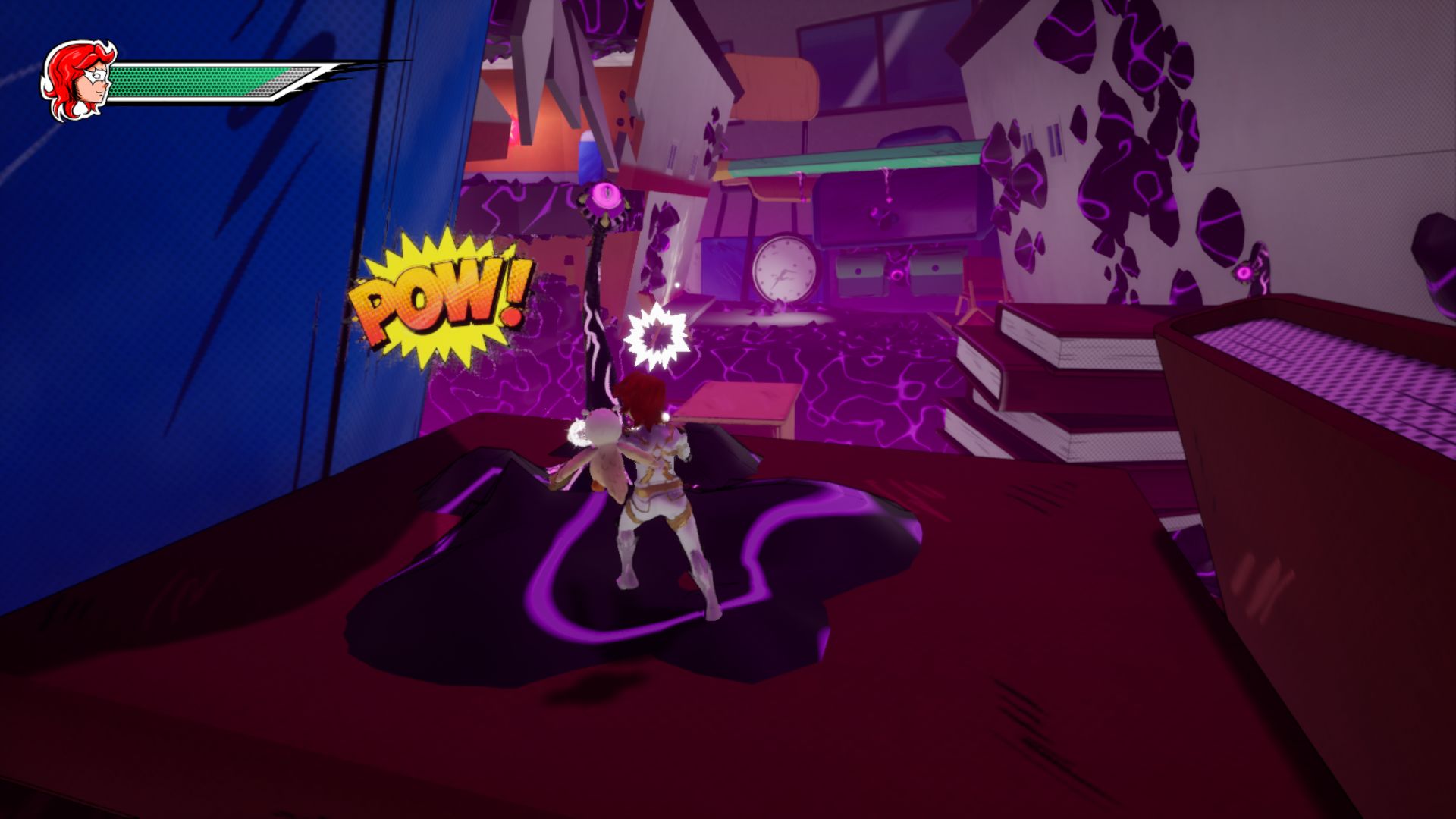
In the game, the player progresses through a level filled with patterns and enemies, each representing the obstacles and challenges associated with Maé's traumas. Upon reaching the final boss, the player will have three distinct ways to defeat it, each reflecting different psychological approaches to confronting real-life traumas.
Narrative Design
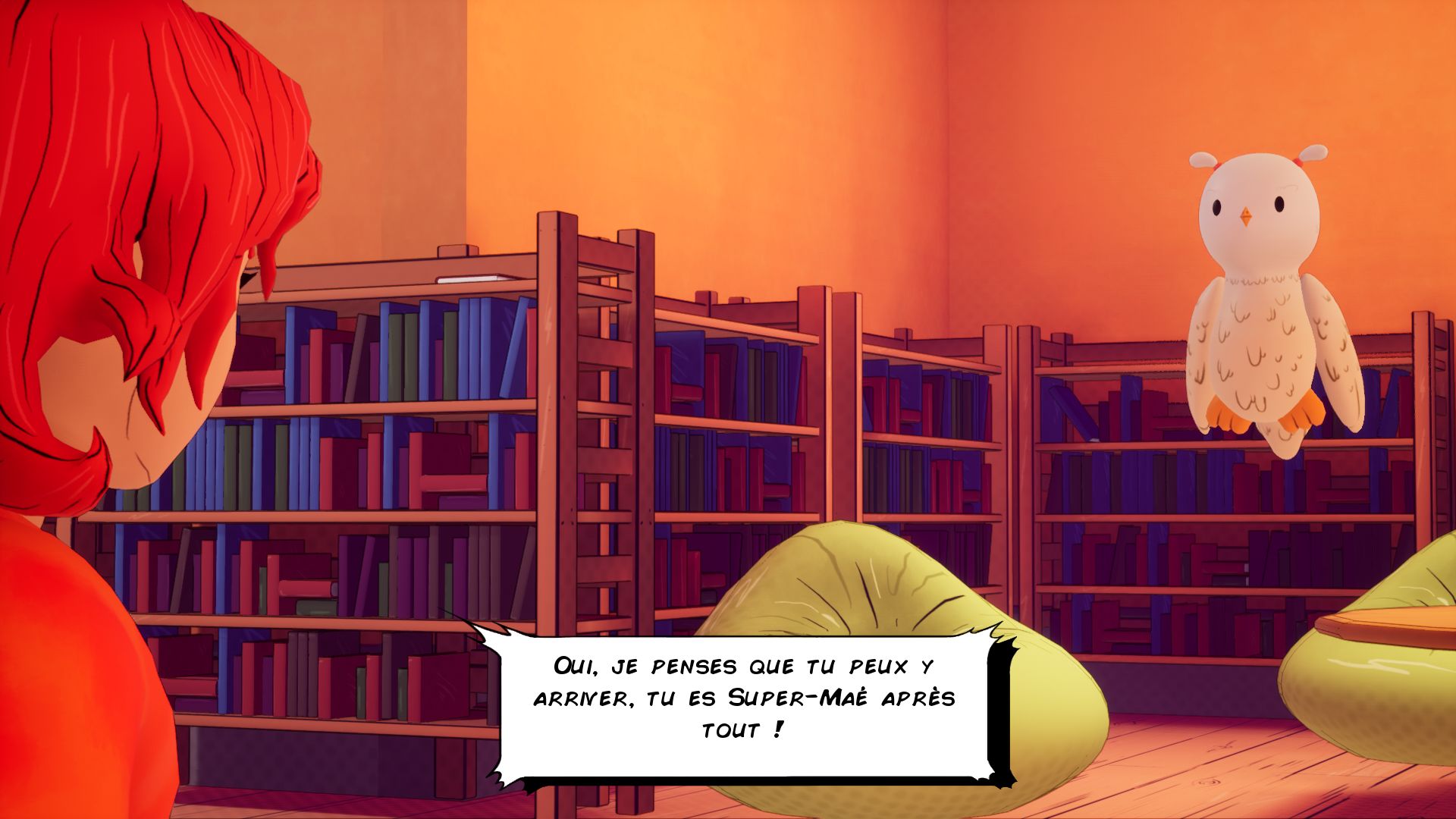
In his nightmares, Maé transforms into "Super-Maé," gaining the ability to overcome his fears and harness powers such as double jumps, dashes, and increased strength.
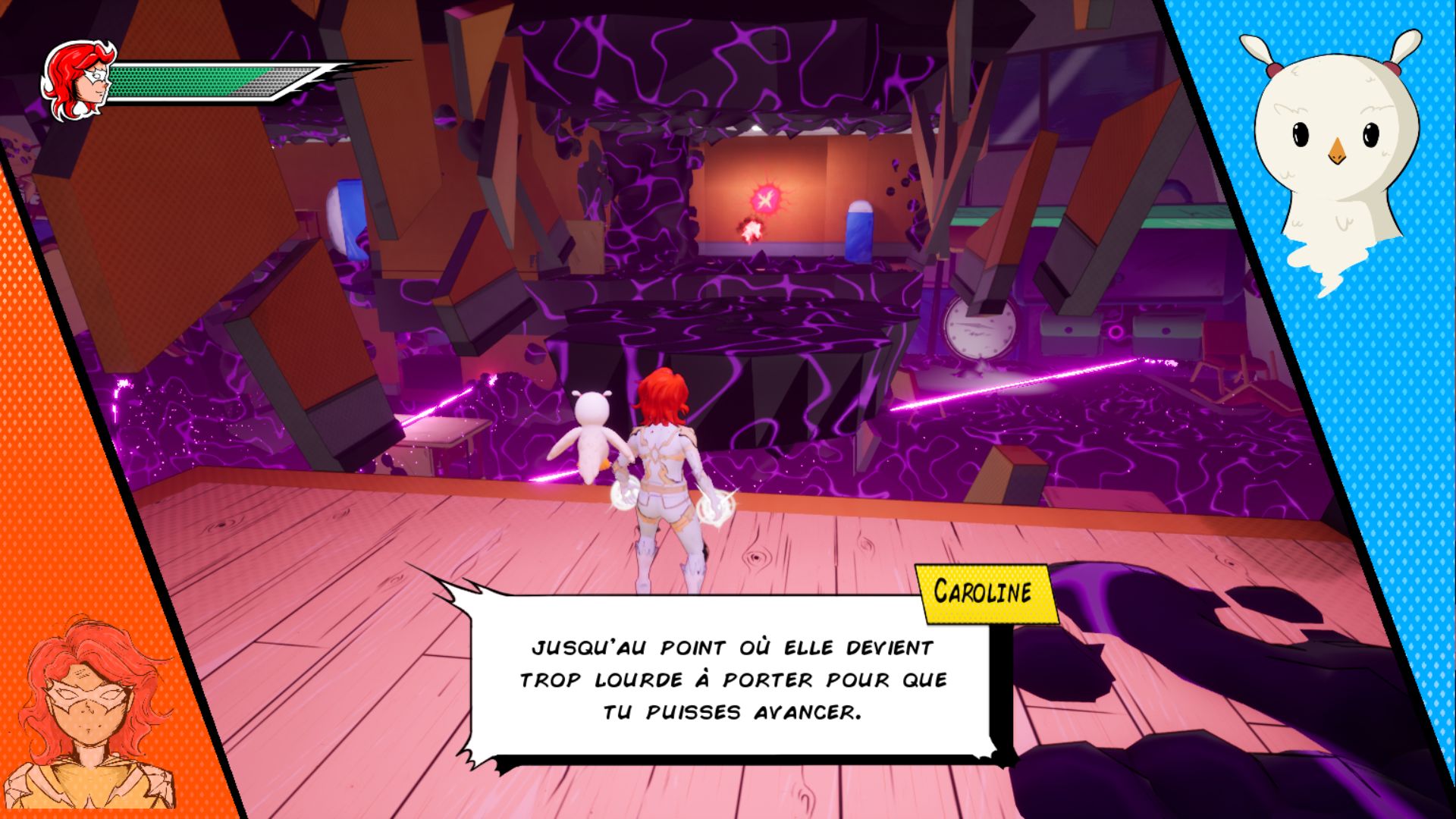
The character will also be able to talk to their psychologist Caroline, portrayed by an owl plush, during in-game cinematics, who will help him understand what is happening and face the difficulties.
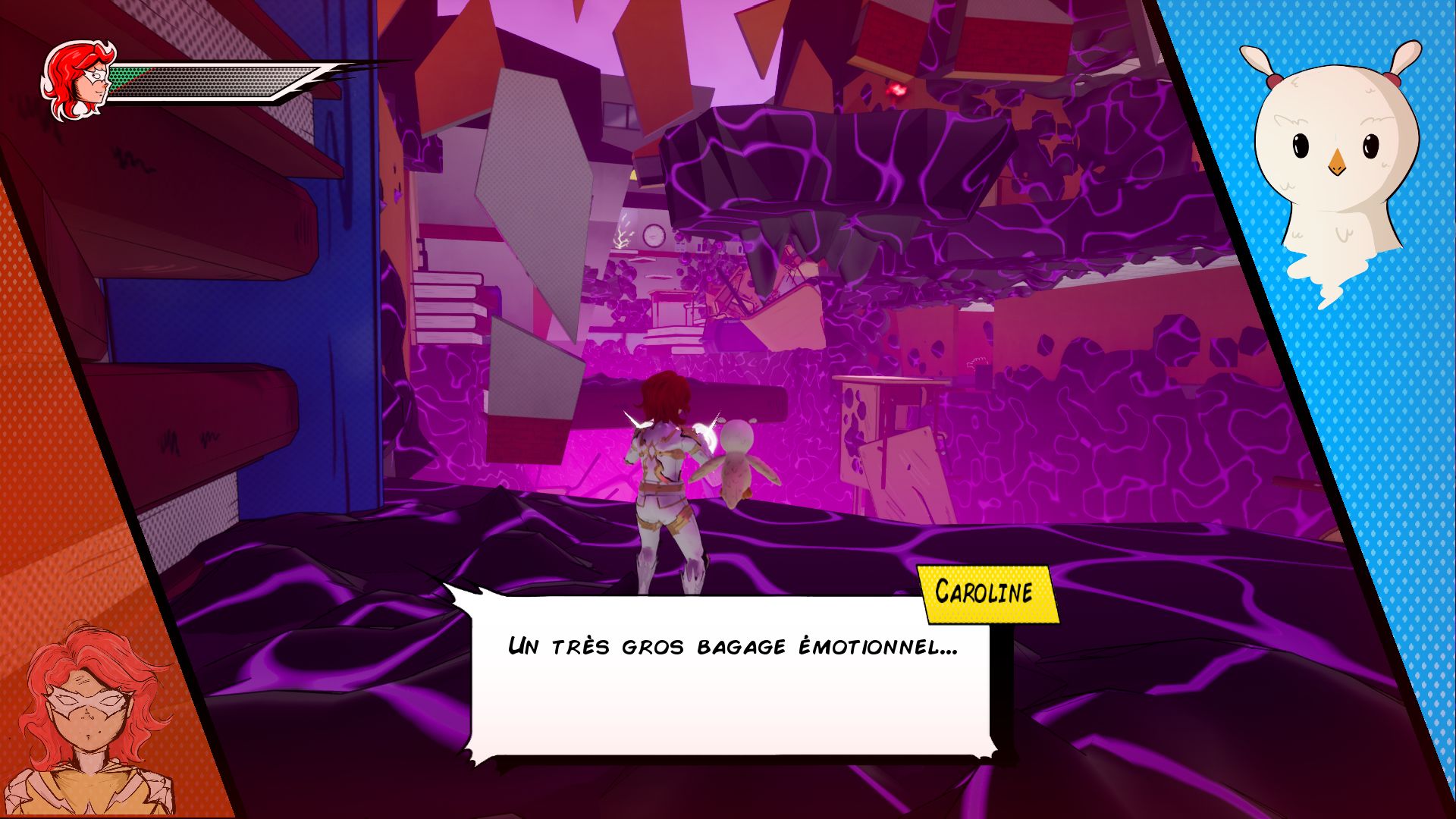
A key aspect of the game design revolves around the environment's narrative, which serves as a powerful storytelling tool to reveal Maé's story. This particular level theme was "the judgment from others," represented by the eyes. By immersing the player in this narrative-driven experience, we aim to create an emotional connection that keeps players engaged while exploring Maé's experiences.
Level Design
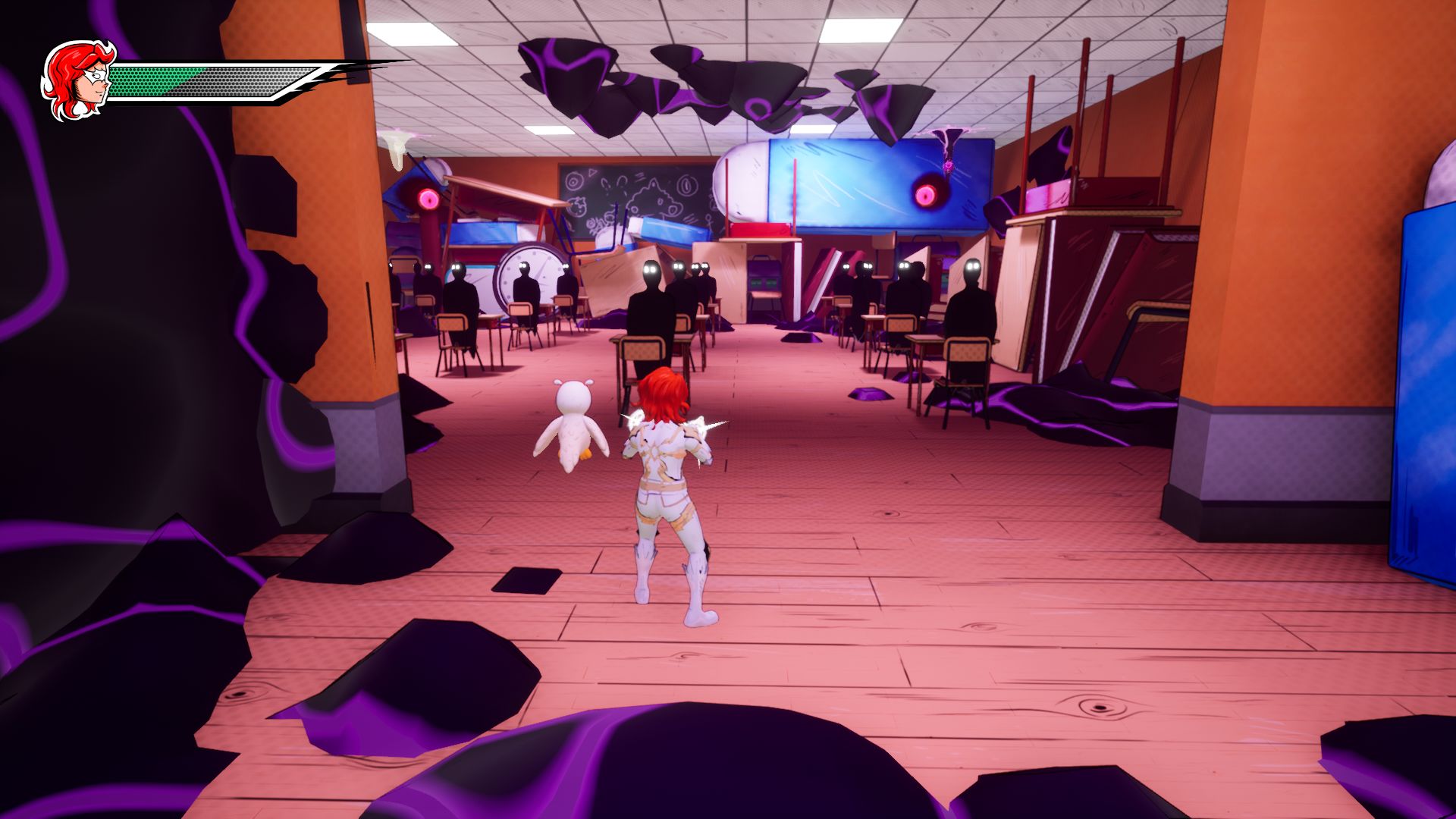
We settled on a modular approach for the level environment, so that I could easily create any shape of building using pre-made walls and elements, facilitating rapid iteration through different level configurations.
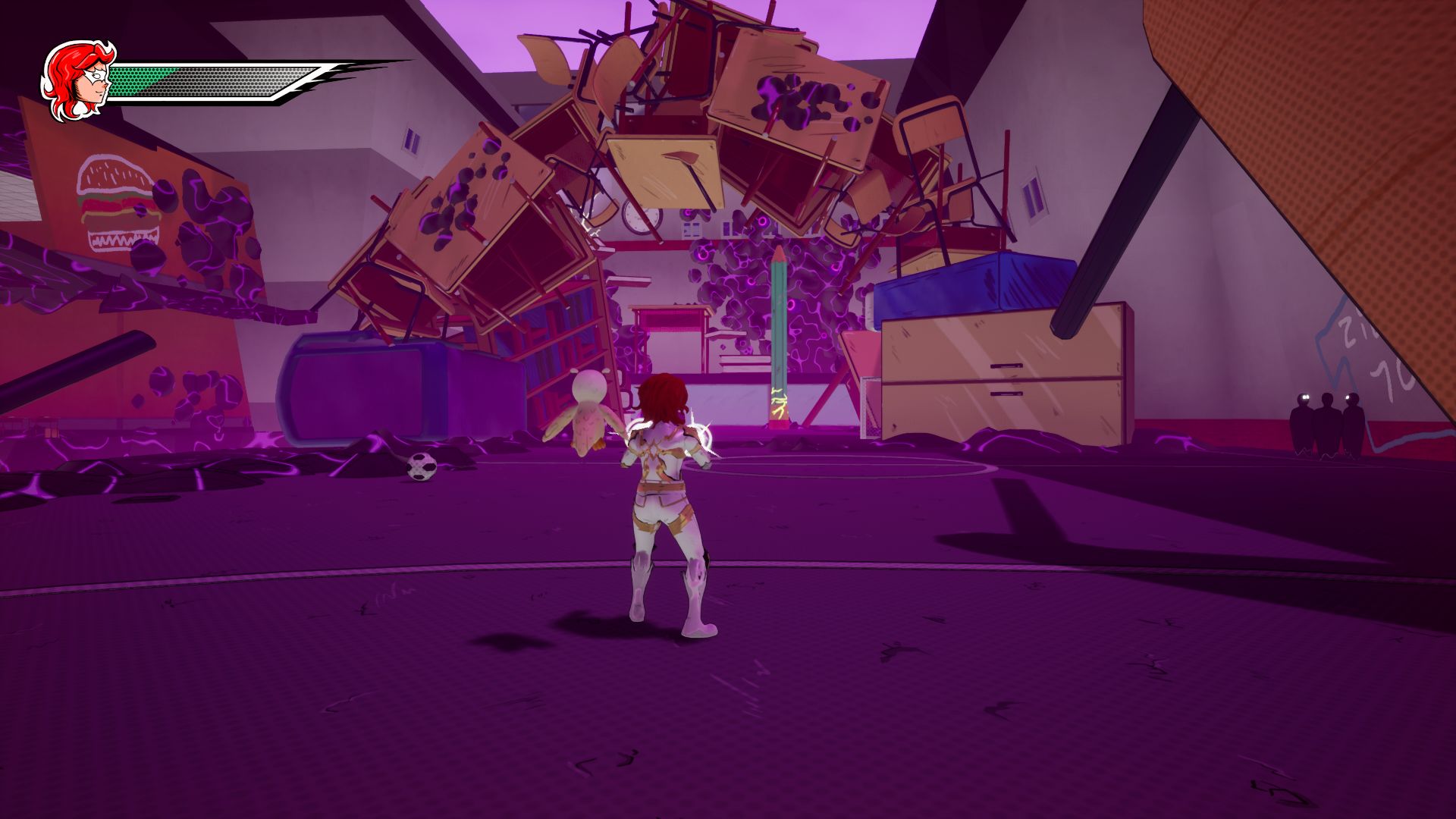
This level takes place within a distorted school, a manifestation of Maé's nightmare, filled with upscaled objects and items that feel out of place, along with a spreading purple miasma.
This deliberate design choice heightens the sense of pressure and powerlessness, while still ensuring an engaging gameplay experience for the player.
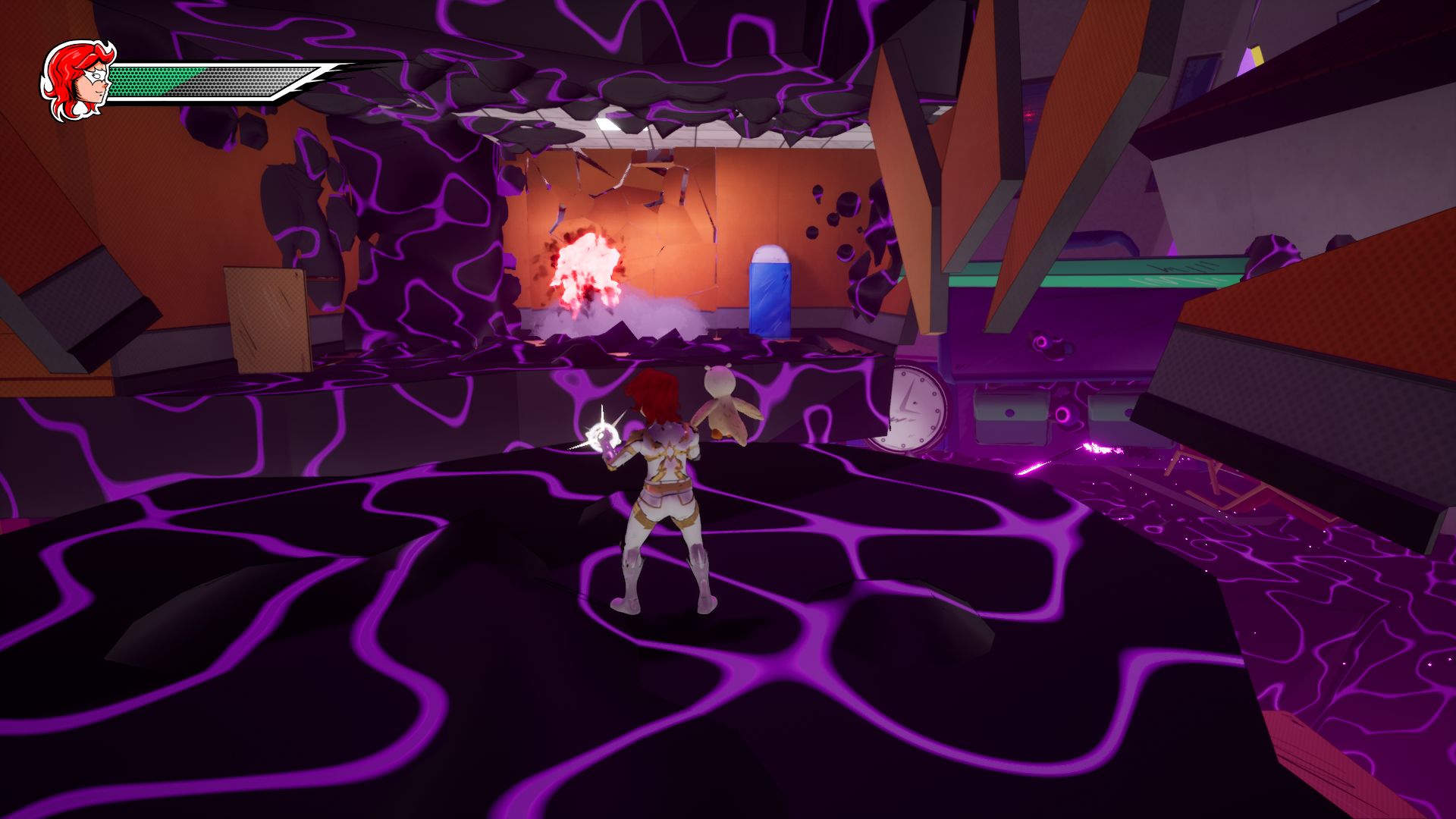
The level is designed with one critical path, complemented by smaller optional areas to explore. The enemies and obstacles encountered will introduce gameplay mechanics that the player will need to use to defeat the boss of the level.
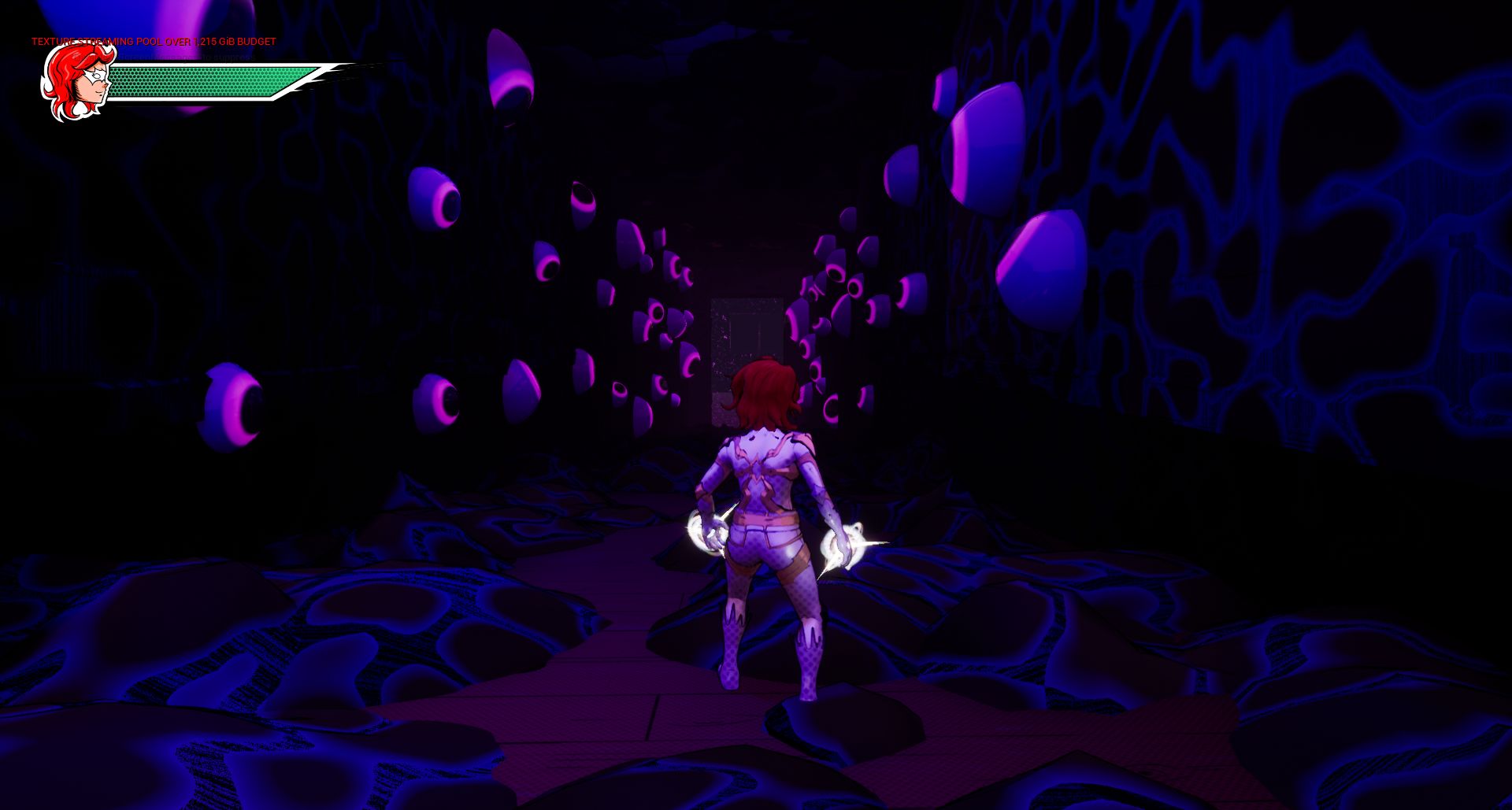
After traversing a long corridor with eyes watching Maé, serving to ease the pace while maintaining tension, the player arrives at the boss room.
The boss fight
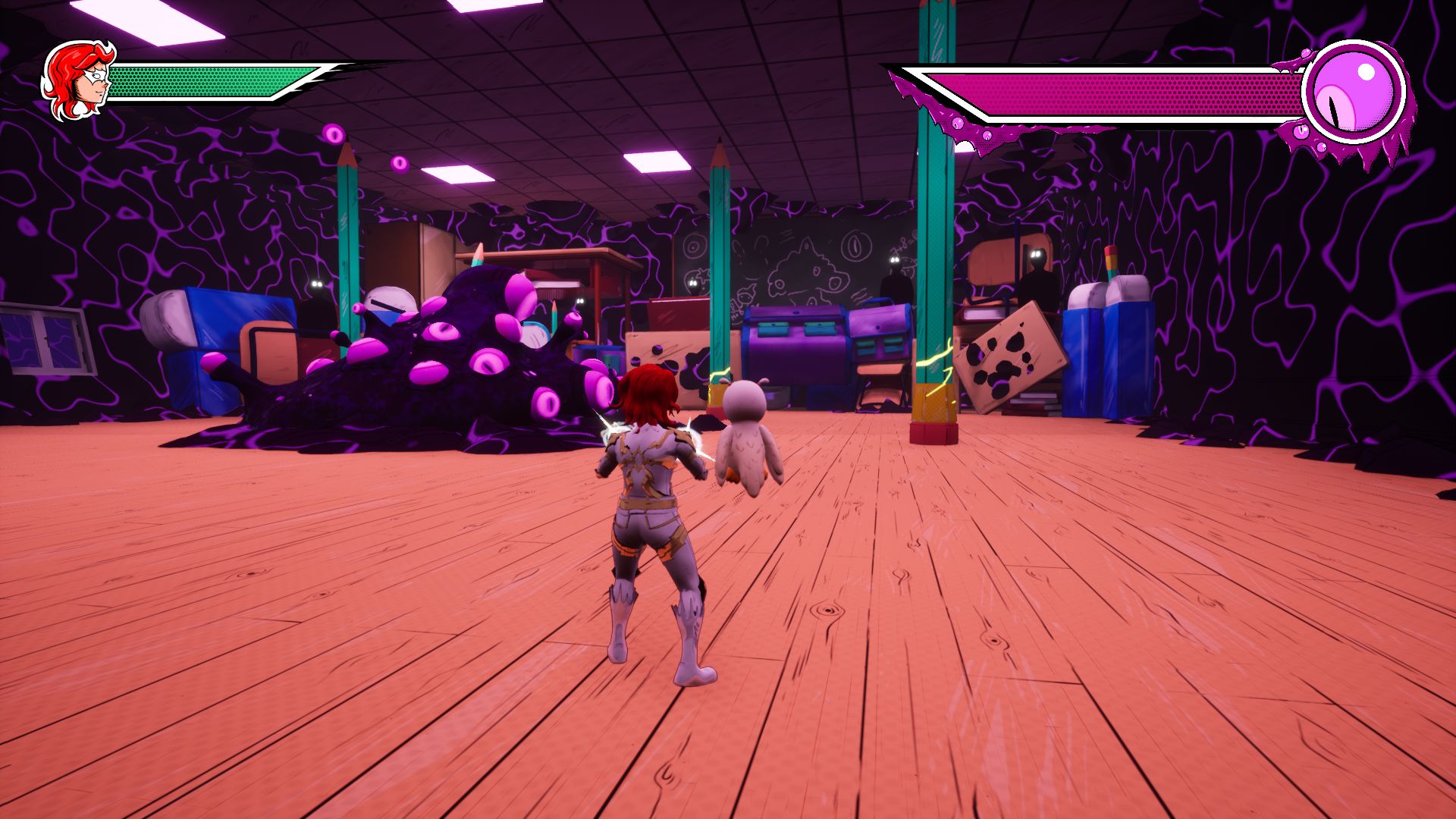
The boss fight is divided into two phases. The first phase takes place in Maé's classroom, where tables and furniture are arranged to form an arena. The boss uses three attack patterns that the player has already encountered from enemies earlier in the level.
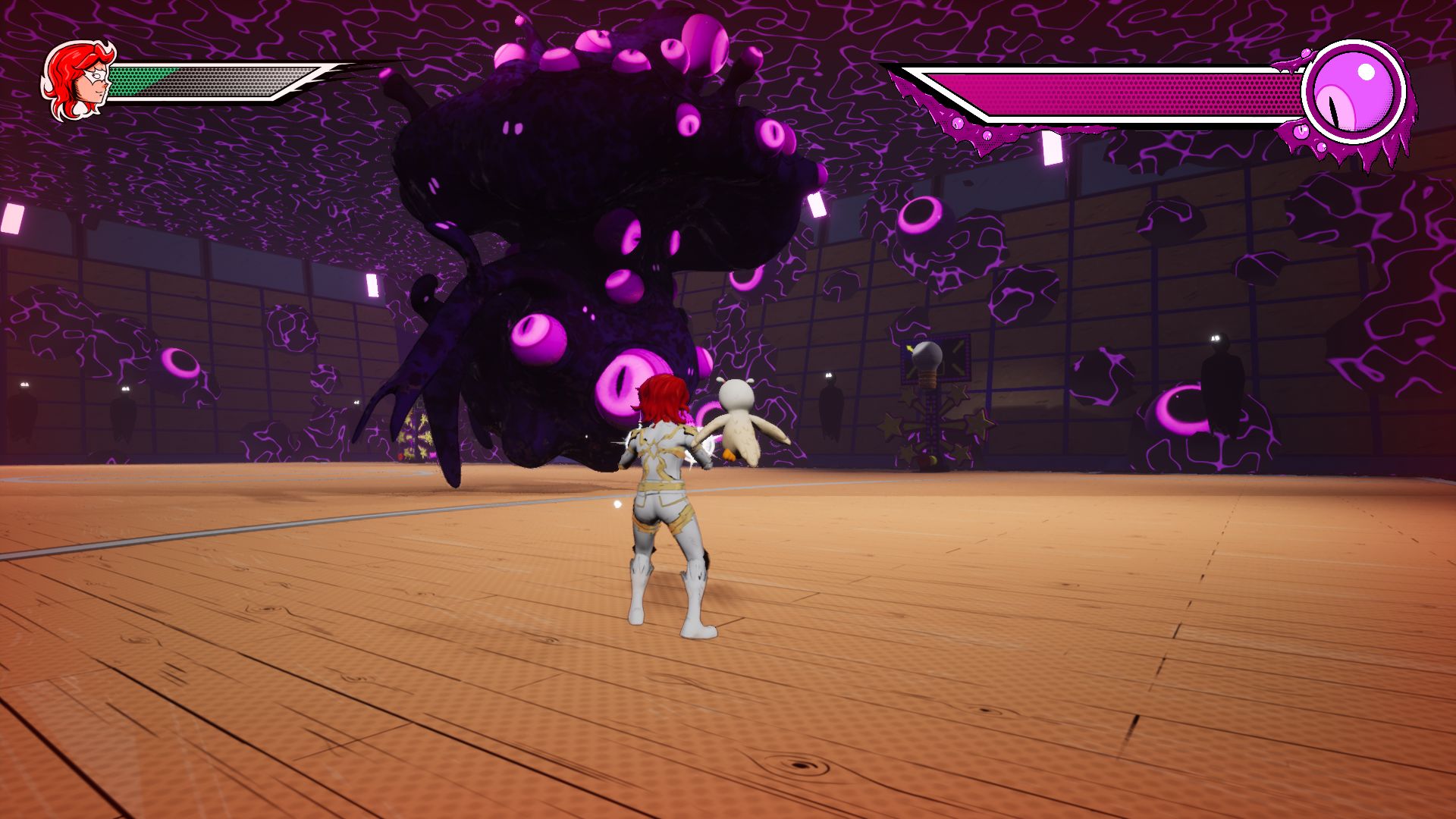
Once the boss's health reaches halfway, the classroom floor collapses, causing Maé and the boss to fall along with the debris into the gymnasium below, a much larger arena. In this phase, the boss upgrades its attacks, slightly altering its patterns, requiring the player to learn and adapt to these new challenges to defeat it.
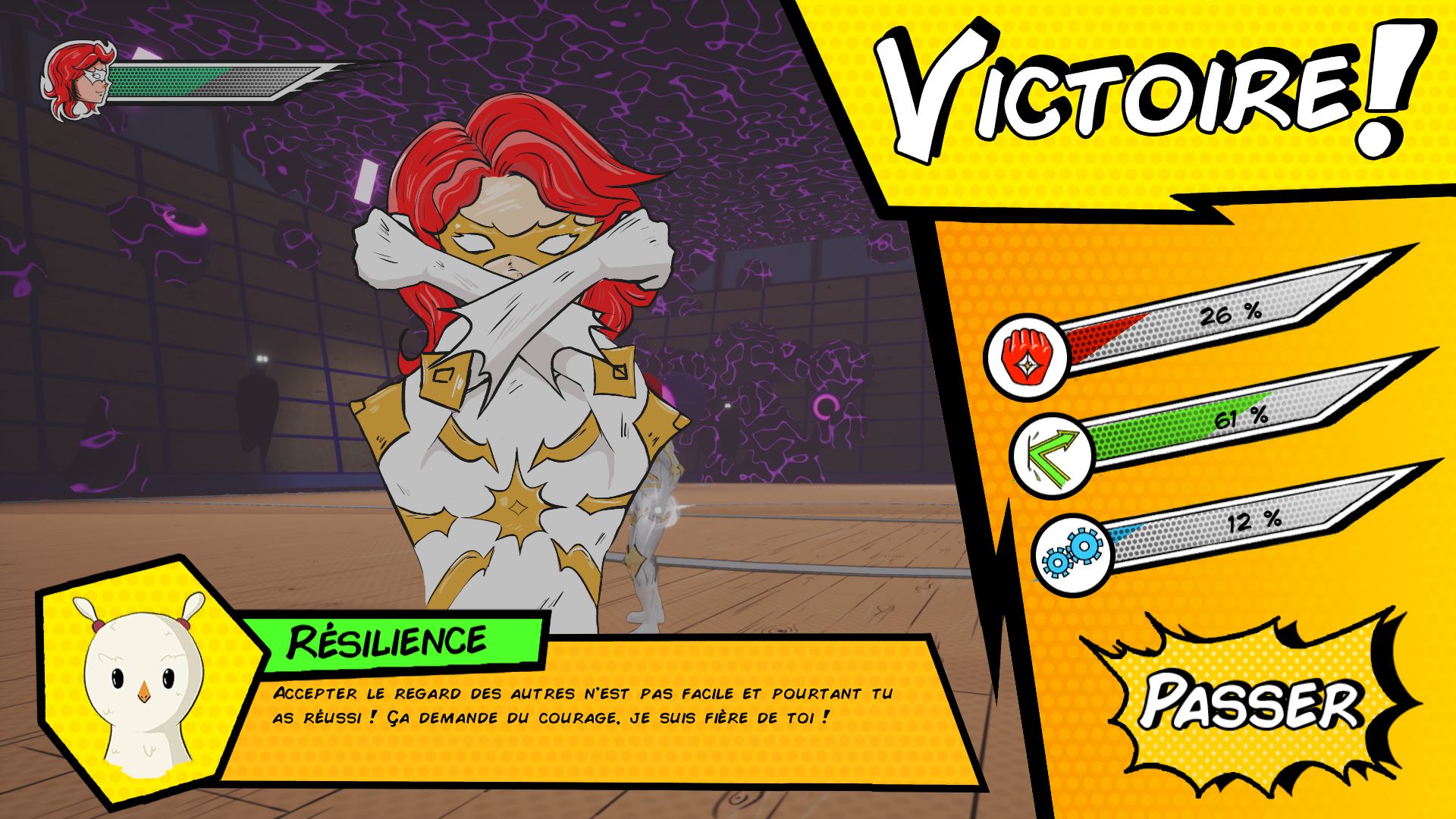
After defeating the boss, the final screen reveals which playstyle the player used the most, drawing a parallel with psychological approaches to confronting difficulties.