Business City
Business City is a casual mobile game, combining puzzle mechanics with city building and simple yet strategic rules.

Finding the right game loop
I explored various game loops to determine the best approach for my game. I experimented with managing one, two, and even three resources. In the end, I adhered to one of my core principles: less is more. The player primarily manages a single resource, money.
However, I introduced an additional resource, blueprints, specifically for upgrading buildings. Using money for upgrades would have resulted in overly complex calculations for the player. Blueprints allow for deeper gameplay without overcomplicating the system.
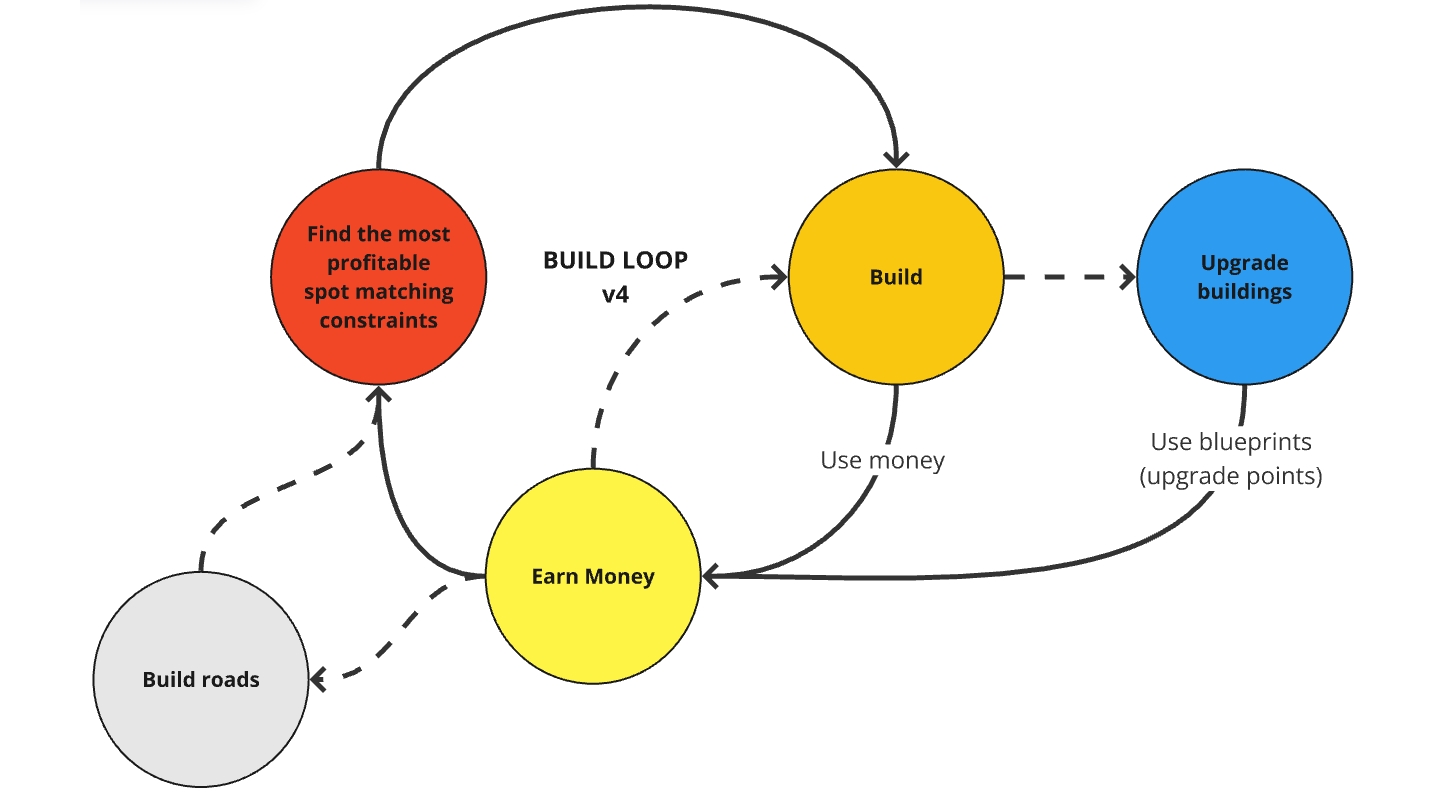
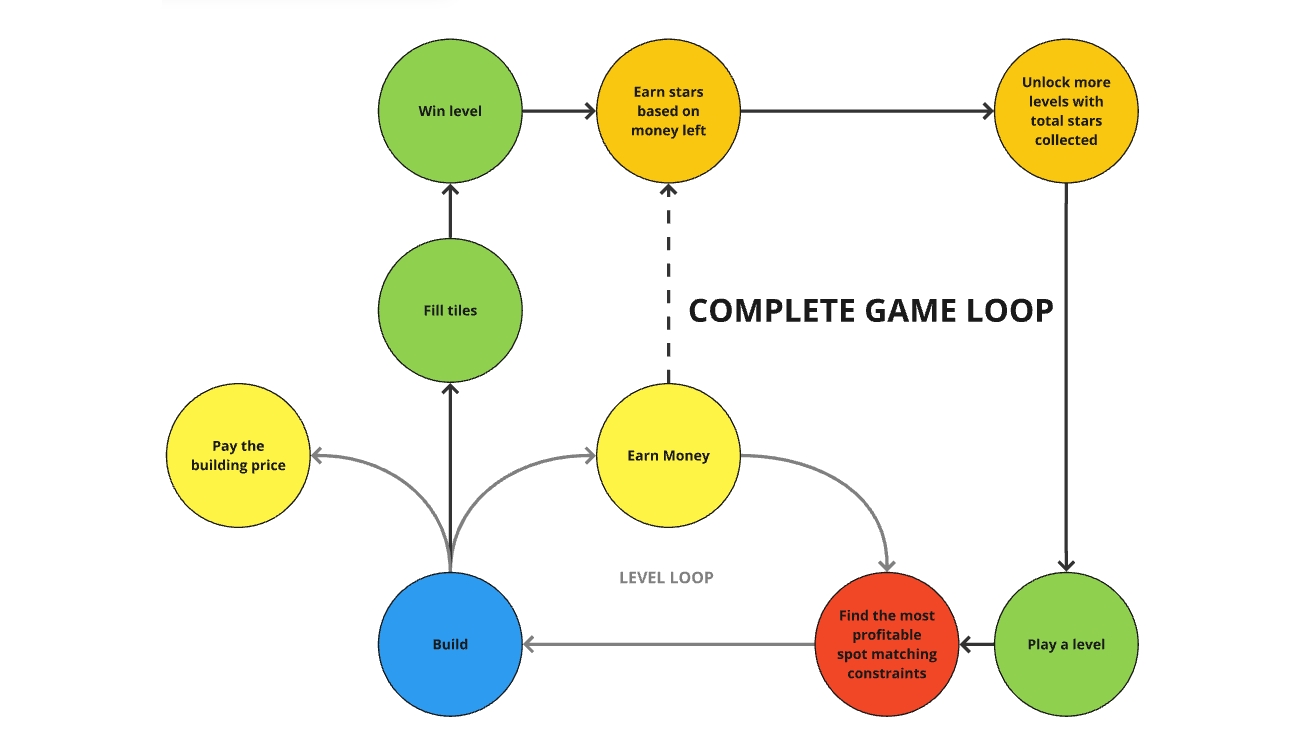
Here is the full game loop for playing levels. In this mode, the player has access to packs of 6 levels. Finding the optimal layout is rewarded with stars, which unlock bigger levels.
Feedback and satisfaction
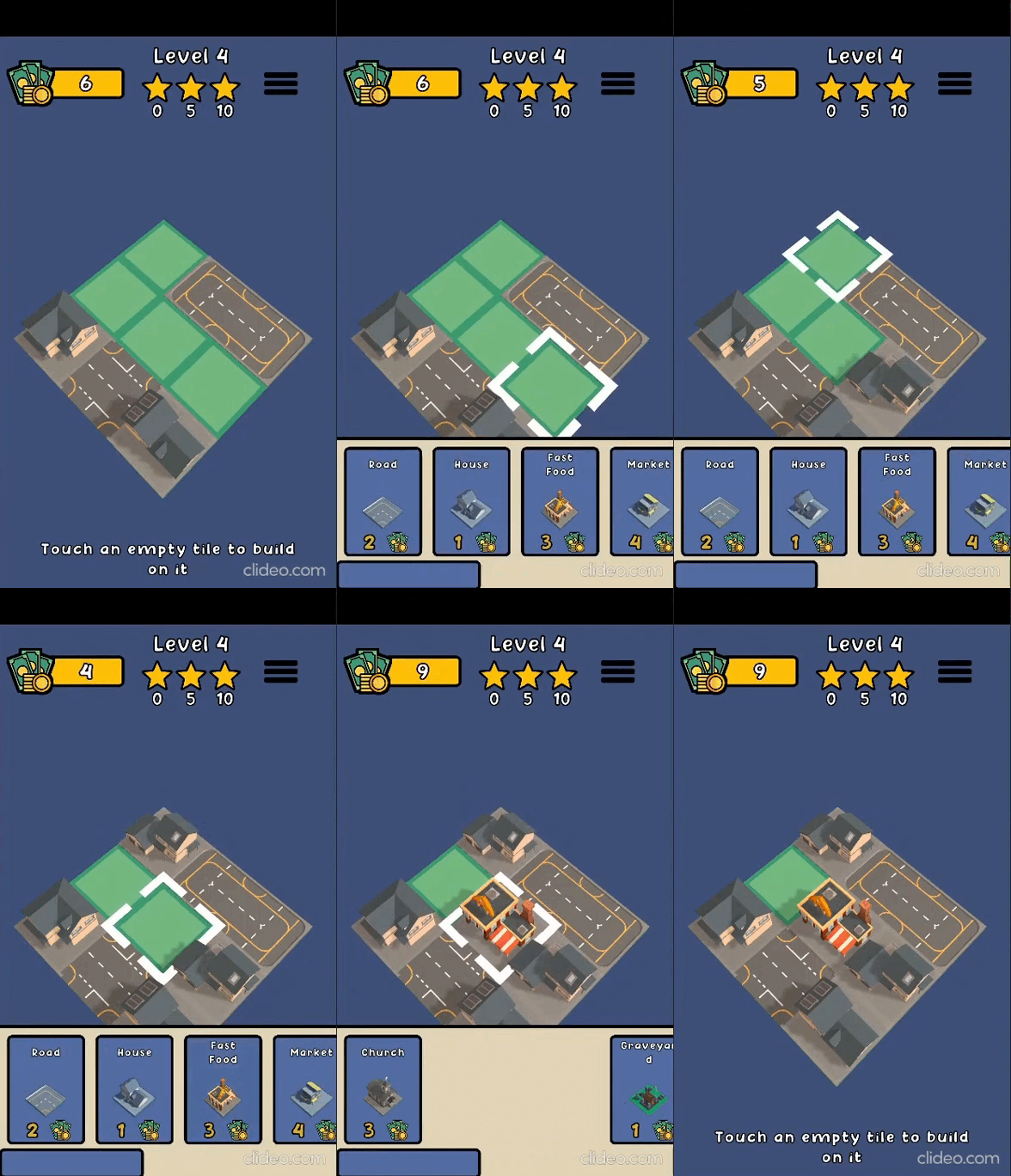
To make the building process enjoyable, I added VFX, sounds and small coded animations, such as tiles bouncing when money is collected after building.
UI and UX design
I designed the main menu and game menu to be simple and minimalistic, using colors to enhance affordance and make each button's function clear.
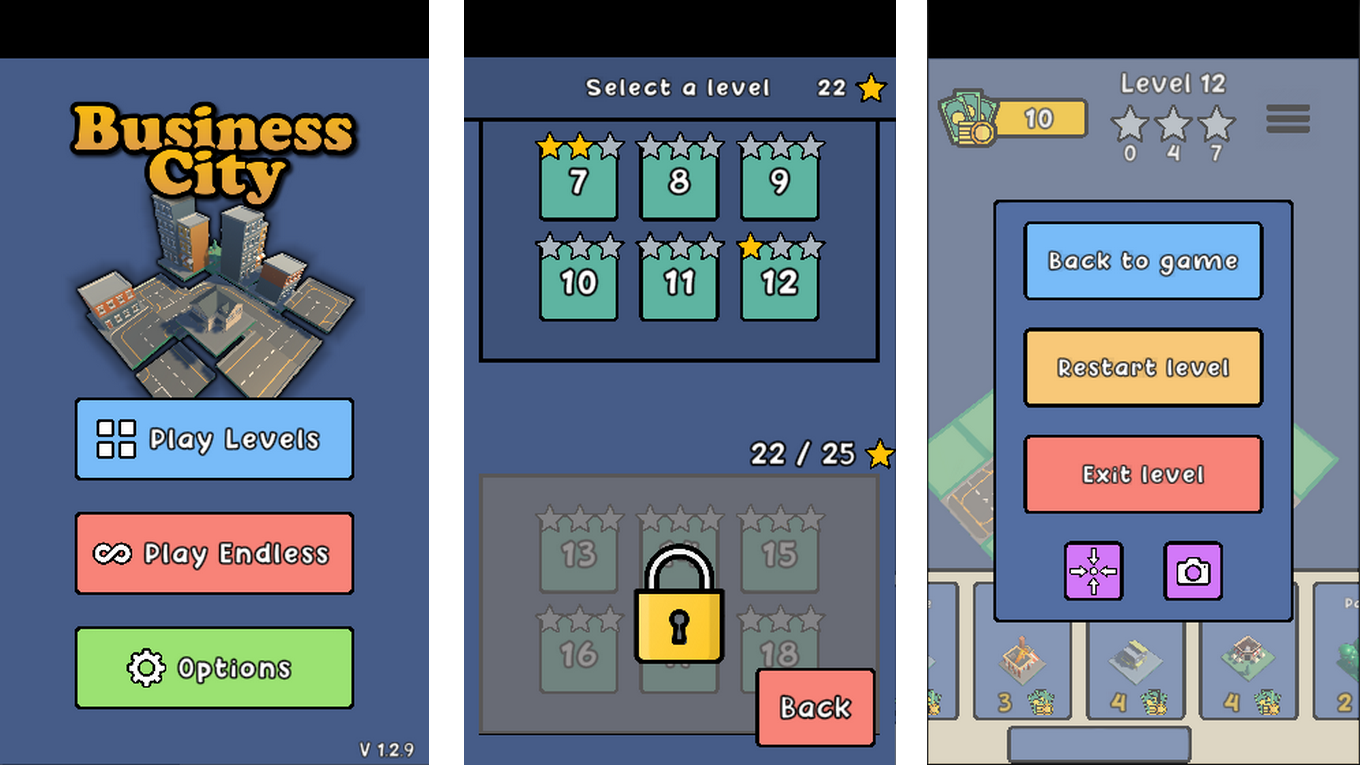
The in-game UI is fairly simple, featuring a "build tab" at the bottom where players can select the building they wish to construct, along with information such as money, the amount required to earn each star, and the game menu at the top. The main challenge was designing the build tab to accommodate all the buildings without making the icons too small.
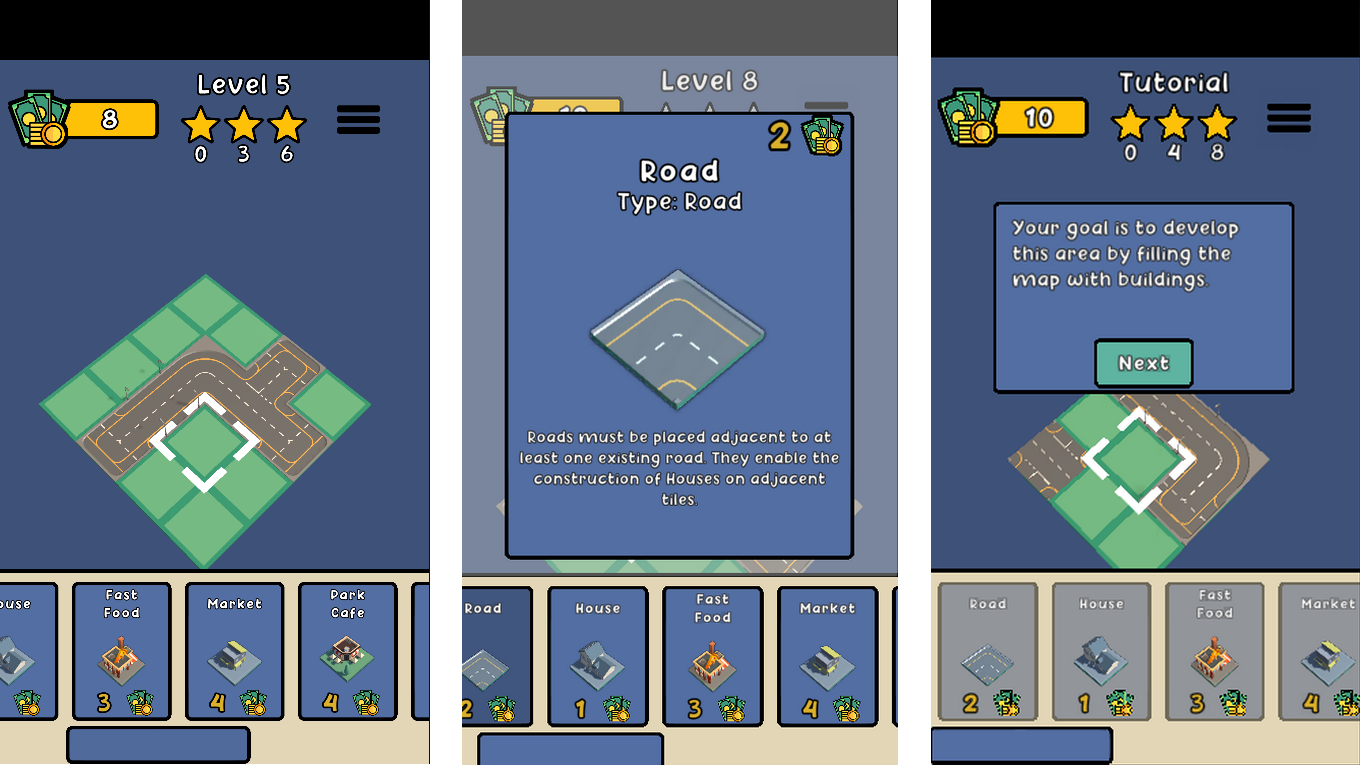
- I implemented a scrollable build tab that allows users to swipe with their finger to navigate. The scroll bar provides a clear indicator of the remaining scrollable area.
- Holding a finger on a building reveals a detailed description of how to use it.
- The tutorial has its own UI with buttons greyed out, ensuring the player can only click the appropriate ones to learn how to play.
Building interactions
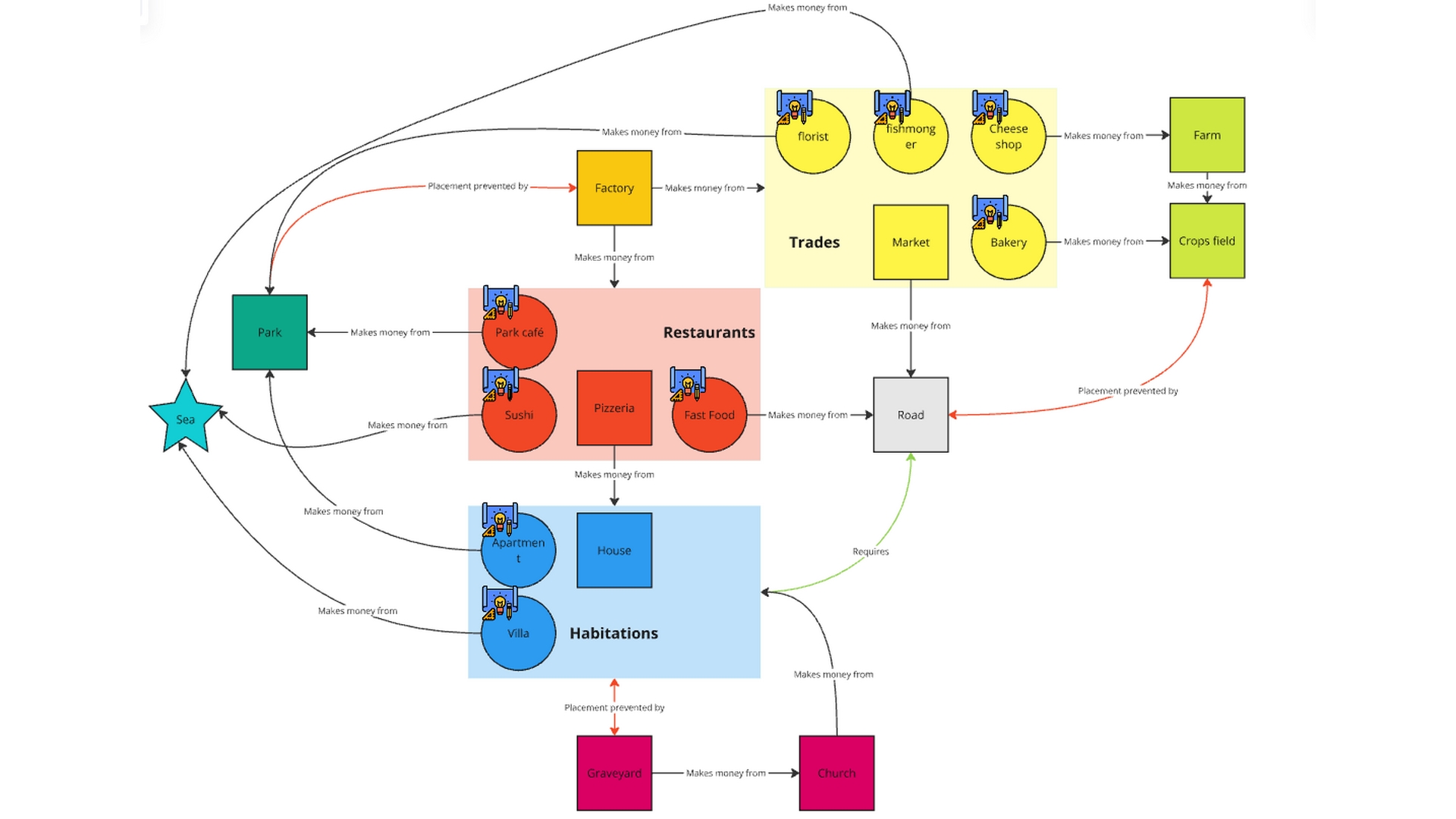
The core design challenge of this game is creating meaningful interactions between buildings. There are two types of interactions:
- Money production: some buildings generate money when placed near specific others. For example, park cafés produce money for each park nearby.
- Placement conditions: certain buildings have placement rules. For example:
- Habitations must be placed next to a road.
- Graveyards cannot be placed next to habitations.
To avoid unnecessary complexity, a building should not have too many interactions. The interactions should also be logical and intuitive, so players can easily understand and remember them.
Introducing new gameplay mechanics
To keep the gameplay fresh and balanced for all players, new mechanics are introduced at higher levels. Those key features make the game more challenging and diverse:
- Increased map size, expanding strategic possibilities.
- Different city types, unlocking new buildings and interactions.
- The introduction of blueprints, a building upgrade mechanic that enhances gameplay.
- Levels featuring sea tiles, which cannot be built on but generate money with specific buildings.
- The appearance of money boost tiles, increasing the income of buildings placed on them.
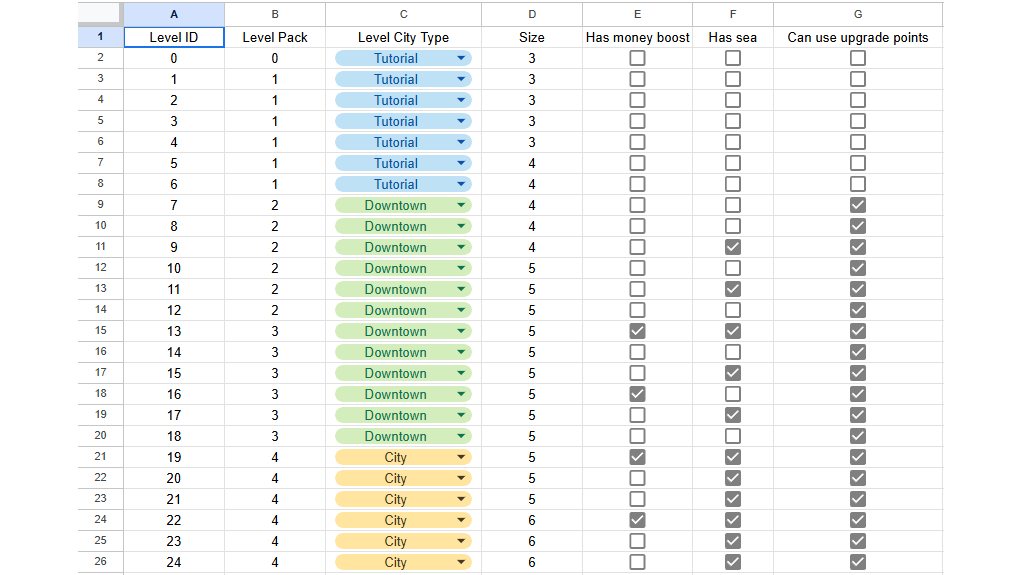
These mechanics are introduced gradually, ensuring a smooth learning curve and allowing each player to progress at their own pace.